21.8.11

THREE MINUTES OF SUMMER

Life has been uphill this summer----tightly scheduled, hot and muggy, and played out against an unenthusiastic economy.   However, one occasionally steals a moment here or there---an hour spent with cousins too seldom seen, mussels with bright amusing friends, likewise too seldom seen (have I remembered to send a thank-you note?  Is September too late?).   This weekend, was especially crowded with people and events, but one was able to steal a happy hour from packing for an Antiques show to visit with a cousin too seldom seen, and then, in the evening, dinner with friends also too seldom seen, up for the week.

I'll soon be back to posting about antiques, architecture and the usual subjects, honest, and if DPC is still speaking to me, I'll finish four pieces I've been working on for him.   In the meantime, three of the nicer minutes of my weekend---for which I had to pay by working Sunday to catch up.  No fun goes unpunished up in the Puritan air of eastern Maine: 

  Here is the Dilettante having sunset swim with friends before dinner, a fog bank rolling in  to take off the heat of the day---Thanks Wendell, dinner was delicious!


And here is the Dilettante having a glass of wine with another friend, admiring her lovely late summer garden and watching boats go by, after both of us spent a twelve hour day working at an Antiques show for benefit of a museum whose boards both sit on.  The shadows are growing longer....


Back soon, with the usual tales.  In the meantime, a preview of things on my mind:


A Lost Garden

Fletcher Steele Down East

A grand house that saw many lives

 Chicago spends the summer Down East

Greater Down Town Head Tide, Maine

Lord Kavanaugh's Mills

 Down East Real Estate Highs & Woes

The Genius of Place

Columns along the Kennebec

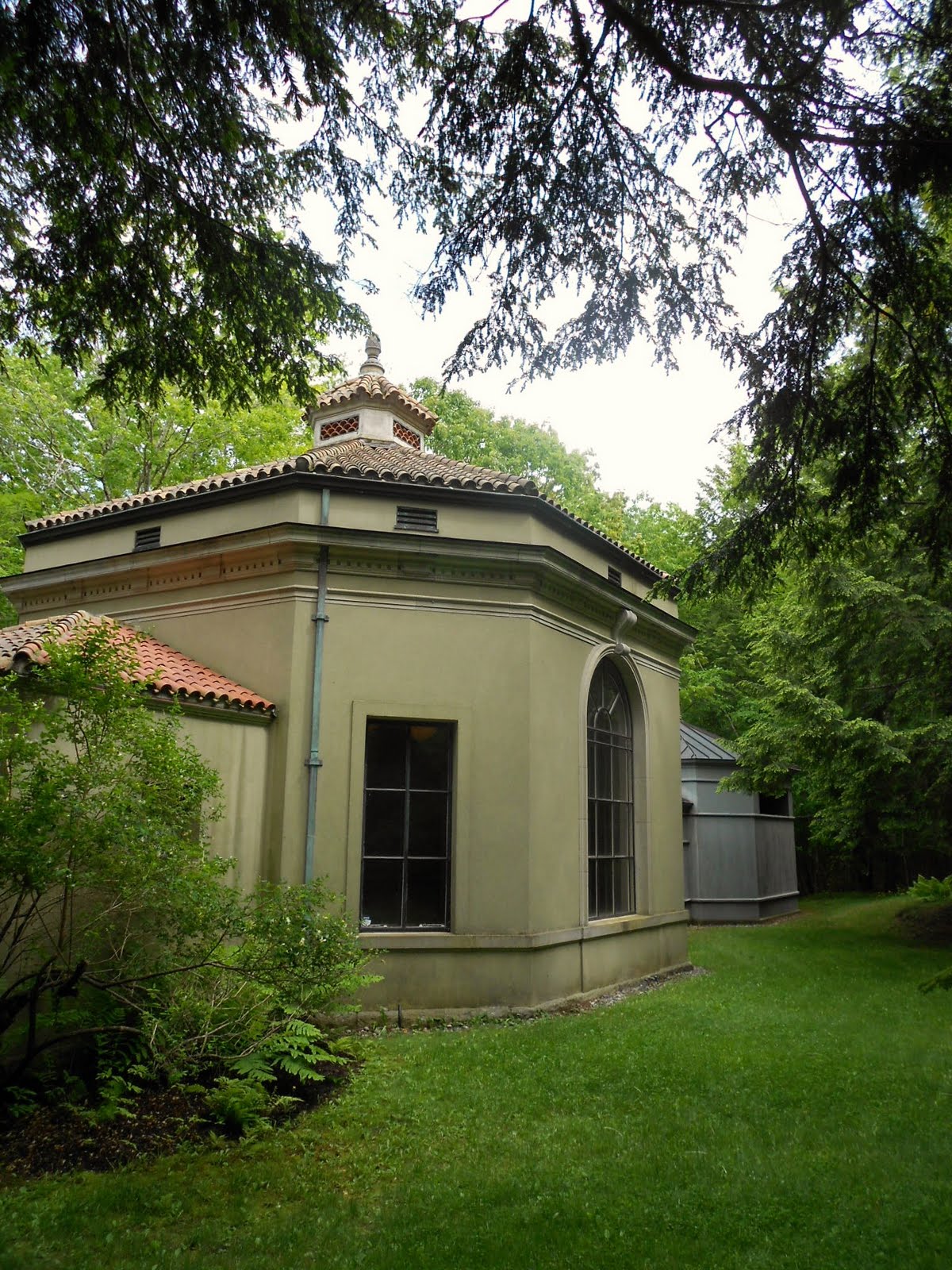
 Columns beside the Golf Course---A Temple for the Arts Down East


Republicans are not always ungrateful

A Federal Case

Elsie Does Regency

Looking at Color Theory

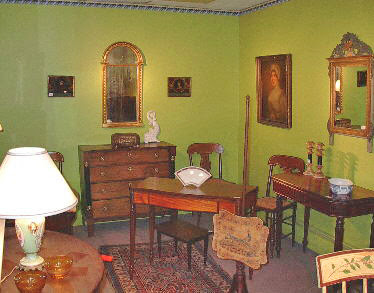
When the Dilettante went green

An artisan's bungalow
Rich Down East Dilettantes & their personal museums
(Not to be confused with poor Down East Dilettantes & their personal blogs)

Mr. Rockefeller & Mr. Atterbury channel Hansel & Gretel

See you soon.


15.8.11

BACK TO THE FUTURE

I was flipping though the September 1922 issue of Town & Country---ever up on current affairs, the Dilettante---when this demure debutante caught my attention.  Understated to the point of plain, who would guess she would one day advise mothers to wash their children's hair in dead champagne, let alone commission for herself a garden in Hell?

2.8.11

PINK PALACES

The Dilettante is completely flattened by projects at the moment, leaving  no time to blog, and I probably miss all of you more than you miss me, as I thrive on feedback (as the guy said, I don't care what you say about me as long as you say something).  I am happy to report, however, that so far this summer there have been no exploding cars, although the heat, with barely any rain, has been almost unbearable, reducing the lawn to dust, and the Dilettante to a sweaty puddle (am I supposed to say 'sweat'?  It seems so non-u).

Pictured below is a house in Castine, Maine, designed by fashionable architect William Lawrence Bottomley for Miss E.K. Branch,  a banking heiress from Richmond Virginia,  related to writers James Branch Cabell and Ellen Glasgow (who herself summered in Castine).  For my article about this fascinating house, in the current of issue of Portland Monthly, please click HERE.


There have been a few interesting developments in Dilettante Land.  Bloomberg News wanted to take my picture for an article in which I'll be quoted, but the photographer didn't show up.   Guess he was busy photographing the Mayor's new house in Southampton.  Just as well.  One is not completely fond of being photographed.

 In addition,  I'll be back soon with a major announcement (fingers crossed), or at least some interesting gossip.   Now, if you'll excuse me, it's hot, it's nearly 5:00 PM, and I know there's a martini with my name on it somewhere.  Sidekick?

8.7.11

OLMSTED AND A GATE

This gate is a footnote in landscape history.  Subtle, deceptively simple, it is only as one examines it that one realizes how good it really is.  It is the main entrance to "Point d'Acadie," the long demolished George Vanderbilt estate at Bar Harbor.  Like all of his family, Vanderbilt was an inveterate builder, and in 1889, even as he was acquring the 146,000 acres of North Carolina that would become the Biltmore estate, he had Frederick Law Olmsted at work landscaping this smaller (by Vanderbilt standards) project at Bar Harbor.  Olmsted's work at "Point d'Acadie," a prelude to his final great work at Biltmore, would include new roads, carefully composed clearing and tree plantings, a new stone terrace and stairs that would enhance the transition of the large shingled house to the landscape, and the damming of a small cove to be used as a naturalistic swimming pool, Bar Harbor's first, complete with rustic Adirondack style cabanas.  All this even as George Vanderbilt was embarking on the largest private building project of the era at Biltmore.  The site of "Point d'Acadie," which Vanderbilt had purchased for the then large sum of $200,000 (Approximately $7,000,000 in today's dollars) is a spectacular little Peninsula jutting into Frenchman's Bay, views of water and mountains on all sides.  


Later highway construction has partially submerged the gate, but it is nevertheless a classic example of Olmsted's approach to designed elements in the landscape, subtle, with materials and shapes carefully considered in relation to the landscape.  The sweep is broad and gentle, the granite coping carefully rounded and shaped.  It is almost in rebuke to the massive Beaux Arts gate of Vanderbilt's  neighbor, railroad tycoon John Stewart Kennedy of "Kenarden Lodge" (below).


 The driveways at "Point d'Acadie," carefully constructed to Olmsted's exacting specifications, although today not maintained to the manicured, raked daily, standards of the Vanderbilt era, have rarely needed major work since.  


The terraces of "Point d'Acadie" with their broad shallow stairs to the lawns, with stonework and coping matching that of the gate, were similar to other examples by Olmsted, and typify his approach to integrating house and landscape.  The terraces survived for many years after demolition of the house---I regret never having photographed them.


After the house was demolished, the lawns, seen above in the 1920's looking across to the Kennedy estate on the next point, were left to meadow, which probably would have pleased Olmstead, and the effect of nature, as enhanced by Olmsted, was gorgeous. 


Vanderbilt's naturalistic swimming pool started something of a trend at Bar Harbor, and several other estates featured them.  Above is are early spring views from the ruined cove side pool (nature reclaims her own) at "Old Farm," the George Dorr estate, looking across to "Point d'Acadie."  

In recent years a new house was built on the "Point d'Acadie" site, which is private property.  Old Farm is now part of Acadia National Park, which was founded by Dorr.

27.6.11

INTERMISSION: ON THE ROAD TO CASTINE

So many deadlines, so little time.  I'm knocking down four articles for publication, opening the shop for the season---delayed by the endless bad weather and a sewer construction project that has deposited more bulldozers, one lane traffic, and orange cones to block the drive than I ever imagined existed, over the last two months, and basically, I am running backwards to catch up, and finishing up a renovation project for a friend that should have completed a month ago.  So, backwards I run, never catching up.  I promise, promise, promise to come up with something interesting once the Fourth is behind me.  

In the meantime, a couple of favorite houses on the road to aristocratic Castine, one of Maine's loveliest and historic villages, its streets still shaded by elm trees and lined with handsome white houses and gray shingled cottages overlooking a beautiful harbor.  My assignment was to interview the owners of one of the most unusual houses there--but more about that, and breathtaking Castine itself, another day.

Both of these houses, dating from the first quarter of the 19th century, have that 'just right' quality---the elegance and spareness that characterizes early Maine architecture at its best----gently landscaped without the suburban displays that people nowadays just feel they must have.   When did people start forgetting that sometimes what one leaves out is more important than what is added?.  For me, this is how an old building looks best in Maine.


In Maine, the old houses were usually attached to their barns by a series of sheds, so that one did not have to go outside on howling winter nights to use the privy, collect firewood, or feed the horses.  In local parlance, this type of building is known as 'Big House, Little House, Back House and Barn' (an excellent book by that title explores the type further).  Along the Castine Road, there are many old capes where this arrangement survives.  My particular favorite is the one above, built for a farmer of refined taste, painted a subtle washed gray.  In the fifty years that I've been admiring it, it has remained in this perfect state---neither shabby nor tarted up, shaded by massive oaks on its rolling old lawn, sheds and barns rambling off to the side, free of 'tasteful' renovation.  


Almost across the road, this house also sits unchanged behind its stone wall, having somehow miraculously survived 200 years without the indignities of replacement windows or doors.  Behind it, fields slope down to the mouth of the Bagaduce River. The worn white clapboards, hand sawn, give pleasing texture, and the thin muntins and wavy glass of the windows have a delicacy that Marvin cannot duplicate, no matter what they say.   The yard is full of old fashioned shrubs.  Looking at the huge Kolkwitzia blooming in front, one understands its common name, 'Beauty Bush'.


Next door is a small ancient cemetery, with beautiful cut stone wall.  Everywhere along the roadside, wildflowers bloom alongside garden escapees gone wild.  Every year, this lovely season, hard won and delicate, seems to go by at greater speed, and one races to soak it all in.  There are many versions of Maine, but in Spring and early summer, this is the one I like best.

20.6.11

FAIR WEATHER

Finally, for Father's Day, the weather was perfect---the kind of day that we have seen far too seldom this year---blue skies, no haze, not too cold, not too hot, a breeze making waves lap gently on the shore---in short, perfect for lunch with parents and sister on the deck at the cottage.  Dessert was shortcake, with the first native strawberries of the season, deep red and succulent. 

From the deck, a view beyond the neighboring dock to the Mt. Desert Hills

As my father and I sat enjoying the view, he reminisced that he owes this piece of real estate good fortune to his maternal grandfather, a speculative sort, who bought the small piece of ocean frontage in the Depression for $35.00 (Thirty-Five Dollars).  unable to turn it for a quick profit at $85.00, my great-grandfather instead purchased a cute little dairy cottage from a local farm and had it moved to the property, and later gave it to my parents, who added a large living room and a deck dramatically poised high above the edge of the beach (which is what we call the mix of pebbles and rocks along the shore in Maine)

Because of the unending bad weather this year, very few boats are out yet
My father went on to remember that later on, his paternal grandmother, who owned a larger place just down the road, decided after WWII to sell that cottage, for $2,000.  Lest the reader be gasping in amazement, in that same era, the grandest shore front cottage in our town, 3 floors of hulking stone and shingle 16 bedrooms strong, on a 3 acre plot in the most fashionable summer neighborhood, was sold fully furnished, for a mere $15,000. The next time that house, still hulking, still fully furnished, sold, in 1963, the price was $55,000.  That purchaser sold it a decade and a half later, now unfurnished, but hulking still, for an even million, a local record at the time.  And so it goes...the last sale of my great-grandmother's cottage was in the early 80's, in the low six figures.  The next time it goes on the market, it will likely be much higher, and the purchaser far more likely to be wealthy than before.  And so it goes...


Looking directly down on the beach---when I was growing up, this was the best time for a swim, when the tide came up over the sun washed beach (yes, that's my shadow, increasingly large these days), and the water might be as warm as 60 degrees, though more likely 58.  One doesn't do it as willingly now...

6.6.11

MEMORIAL DAY AROUND THE VILLAGE

This post is a week late---I got distracted by architectural frivolity and Edith Wharton, and forgot I had these pictures.

Of course I spend many days of my life running errands, going to meetings and parties, passing through our village.  But it is on Memorial Day that I slow down for a few minutes, literally smell the flowers, and stop and think about where I live.  It takes an even harder heart than mine not to be moved by this day of remembrance, solemn and sweet, played out against the reluctant, delicate, spring.


The weather this year has been----how do I say this gracefully----perfectly, absolutely,  shitty---cold and rainy 24/7, a slight improvement over the winter, which was grey or snowy 24/7.  Above is an old untended crab apple at the edge of my field,  the mountain behind obscured by cold fog.  It was a perfect cloud of blossom the day before, disregarding all rules about wearing white before Memorial Day.  Memorial Day came off hot and hazy, and by evening, the blossoms were gone.  Life is short.

I wandered down the street to the parade.  Around the corner, at the school, the band---a very good band---was warming up, not yet in formation. 


And everywhere, in yards, hanging over fences, were lilacs and apple blossoms.  The short week or two that lilacs are in bloom in New England are justification enough for the unbearable winters, and hot humid summers that we endure to enjoy another season of bloom.  Almost.


A mill stream meanders through the village, emptying into the harbor from a small fire dam in the village.  The small gristmills and sawmills, and even an early 19th century cotton carding mill that flanked it are all long gone, leaving a few traces.  Just upstream from this view is a flat hollowed out ledge, where long before the settlers from Colonial Massachusetts arrived, the Native Americans who were here first ground their corn.

The combination of Memorial Day and spring makes one tend toward reflection, even---don't tell anyone---sentiment.  My family is long settled in this region, and were active in the affairs of the village when I was growing up, and we were related to everyone, but now, half a century later, our relatives are fewer, their houses occupied by people 'from away', the points of the compass have changed, and my father and I are the last of our line in town.


 Above was my great-grandmother's lawn, sloping down to the millstream and a view of the harbor and main street.  Her white Victorian house, with its bay windows and faded parlor filled with curiosities, is long since demolished, but I still walk past this spot, 45 years later, and remember the scent of the old fashioned monkey faced pansies freshly planted around the birdbath in the garden, the sugar cookies baked in a wood cook stove, the mints kept in a covered dish on the sideboard.  Her father was a 19th century schooner captain, born around the time of the Mexican war.  His oval framed portrait glared down on one in the parlor.  The past was always just around the corner in my childhood.


Looking toward Main Street, the crowd gathers for the parade.  A Civil War cannon on the lawn of the Legion Hall was fired, with great noise and even greater smoke, a momentary reminder of the spectacle of war, and the parade was begun.


 The village square, above, is but a triangle.  Originally, the parade ground was a quarter mile away, at the top of the hill in front of the meeting house.  There mustered the local militia for the War of 1812, when we briefly found ourselves British again.


When I first remember this parade, there were still survivors of the Spanish American War.  Someday will someone write that when they first saw the parade there were still survivors of the Iraq war?  I look at my friend holding her granddaughter's hand, and like so many before me, I make the futile wish that by the time she's our age, war has ceased to exist, but of course I know better ( I also marvel at the passage of time:  When did my friends become grandparents???).


At the bridge where the millstream empties into the harbor, a remembrance is read, a gun salute is fired, a floral wreath thrown into the harbor, and taps is played, followed by the National Anthem.  My neighbor, an extreme conservative, and I, an extreme liberal, are the only ones who remove our caps, to my great surprise.  There is not a dry eye in the house.  For many, it is the remembrance of personal loss, or battles fought.  For others, the sadness and futility of wars past and wars to come.  I'm just glad I was wearing my Wayfarers.  Walking by two hours later, a friend and I note that the wreath has floated out to sea.


The local fire department loves a parade.  I  remember the thrill of riding in the old Mac pumper as a kid, of going down to the firehouse to look it over with my dad.  It was definitely one of the ten coolest things in town.  Perhaps still is.


The local historical society decided that it needed a float---the only one---in the parade.  It was sort of cute, a capsule rendition of the town's history.  Following behind, at the end of the parade, the soldiers of tomorrow's wars. "When will they ever learn?"


Did I mention lilacs everywhere?


Facing each other across Main Street, two versions of remembrance.  The Legion Hall, in the old Academy building, and a lawn with thousands of white flags, symbolizing those killed in Iraq and Afghanistan.  The blue flags represent soldiers from Maine.  

 After the parade, some gathered on the lawn of the parsonage for bluegrass music

And everywhere through the village, old white houses that have lived through more wars than can be counted.
In a moment of personal remembrance, I walked up my grandparent's former driveway, for the first time since they ceased to live there 20 years ago, though I pass it nearly every day.  The magnificent elm tree on the lawn, which barely survived them, is gone, but a couple of the elms that lined the drive are still there, and the forget-me-nots still bloom in the shrubbery


And that's it.  The sweetest, most nostalgic week of the year up here at the eastern edge of the country.  In two or three more weeks, it will be summer, and the world will be on our streets.  Celebrity sightings will be made, real estate and sailing gossip will rule conversation, checkout lines at the grocery will be unbearable, and the snarled traffic on Main St. will remind one of the Hamptons.