6.6.10

Wherever I Look......Déja Vu All Over Again


IT'S A MIRACLE that one of these posts ever gets completed.  A good writer edits and and narrows down the material, I just keep travelling in ever widening circles, ever further from the point.

View of Ouderhouk by D. Voisin

FOR EXAMPLE:  It all began last week.   I bought this little 18th century print, above, of an elegant garden at Ouderhouk in Holland.  I have always been enchanted by these highly stylized pictures, with their awkward perspectives of nature tamed and pruned to an ideal of order.  Thinking of the collection of such prints in the reception room at Beatrix Farrand's Reef Point, I thought I might do a little research and write a post about 17th & 18th century garden prints.


BUT, that very evening appeared a photo of a thrilling 18th century table once part of the inventory of Syrie Maugham's shop, with a scene based on one of these prints on its top, executed in glass beads. Hmmm, a post about decorative objects based on antique garden prints---much more interesting.  We'll go with that.

Tilt-top table, with glass bead inlaid top, 18th c.

THEN, up popped this wonderful picture of a young Beatrix Farrand wearing a dress that would still be plausible in couture today (think Lacroix, sweetie), again taking inspiration from an 18th century garden print...

Beatrix Jones, later Farrand, in a dress inspired by antique garden prints in 1895

ONE WOULD THINK that I could stop here, a quick and neat little post about designs influenced by early garden prints complete, having made my connections.....

BUT NO, not exactly. Today I am going to take you behind the scenes, to what really happens when I start a post.  Once I had placed the pictures in the post, seeing Beatrix Farrand and Syrie Maugham in such close proximity started me off on a tangent before I could push the 'publish post' button....

 Oops.  This space reserved for a picture, temporarily misplaced, of Mona Williams New York Drawing Room by Syrie Maugham


BOTH women did work for the famously stylish Mona Travis Strader Schlesinger Williams von Bismarck Schönhausen de Martini von Bismarck, hereafter referred to as MTSSWvBSdMvB (I expect a special award for pulling that one off).  Farrand designed a Chinese Garden at MTSSWvBSdMvB's Oak Point estate at Long Island, where, to cut down on costs during the Depression, the then Mrs. Harrison Williams (Mona Travis Strader Schlesinger Williams to you) of whom Cole Porter sang "what do I care if Mrs. Harrison Williams is the best dressed woman in town?", tore down the main house and converted her indoor tennis court and pool to a smaller, more easily managed weekend house, the tennis court becoming an indoor garden, and the pool a gigantic living room.

 Above & Below: The Tennis House at Oak Point, the Harrison Williams estate at Bayville, Long Island (House & Garden, May 1948)


I DON'T KNOW if Syrie Maugham did the decor at Oak Point, but she did  do the interiors of  both MTSSWvBScMvB's Palm Beach and New York houses when she was still just MTSSW.  Which reminded me that the Williams's lovely New York house had originally been designed by Delano & Aldrich for Mrs. Willard Straight, née Dorothy Whitney.  

The Willard Straight/Harrson Williams House at E. 94th and Fifth Avenue, New York

TO MY KNOWLEDGE, Syrie Maugham never worked for Mrs. Straight, but Farrand did, designing a Chinoiserie inspired formal garden for the Straight's Elmhurst estate in Old Westbury (renamed Applegreen when Mrs. Straight, widowed in WWI, married Leonard Elmhirst)

Beatrix Farrand. Alternative Scheme of Garden for Mrs. W. D. Straight (UC Berkeley, Documents Collection)

LATER, when Mrs. Straight married Leonard K. Elmhirst, and moved to Dartington Hall in England, Farrand was imported to do design work there.

 Dartington Hall

WHICH reminded me that Olive, Lady Baillie, who owned Leeds Castle, was Dorothy Whitney Straight Elmhirst's niece.  Lady Baillie hired neither Farrand for landscape nor Maugham to work on the famous interiors at Leeds, but rather the French firm of Jansen.  Whew.  I can stop here.

 Lady Baillie's Bedroom at Leeds Castle

OR CAN I?  For MTSSWvBSdMvB's Palm Beach house was purchased by Jayne & Charles Wrightsman, who had Jansen do work for their various homes, but no, I'm going to resist...keep resisting...maybe a picture of Denning & Fourcade's redecoration of Maugham's design for the Palm Beach drawing room?  No, be strong, resist....(however, for those whose curiousity is whetted, it can be seen in a post at the Peak of  Chic by clicking here)  Maybe a photograph of the Blue Room at the White House, as redecorated by Jansen and paid for by the Wrightsmans during the Kennedy era?  No, no, too tangential....although Beatrix Farrand did work on the White House Rose Garden in the earlier 20th century, later redesigned by Bunny Mellon, who.......

OKAY, avoided that one.   But it does occur to me that Mrs. Dorothy Whitney Straight Elmhirst was the sister-in-law of sculptress Gertrude Vanderbilt Whitney, founder of the Whitney Museum, who had Delano & Aldrich, architects of the town house later owned by MTSSWvBScMvB, (the one decorated by Syrie Maugham, whom we seem to have lost several left turns ago), design the most enviable artist's studio imaginable on the Whitney estate at Old Westbury, Long Island.  I have no idea who did the interior decor or the gardens there, so maybe here we can stop, although there is a strong temptation to tangent off to the wonderful murals, by Robert Chanler and Charles Baskerville, that adorn the studio.  Charles Baskerville was the cousin of a friend's mother, after all...And the Chanlers!  There are several days' worth of tangents there.

Gertrude Vanderbilt Whitney Studio, Old Westbury, Long Island (from American Homes of Today, by Augusta Owen Patterson, 1926)

 The Robert Chanler Murals in hall of Gertrude Vanderbilt Whitney's studio

JUST as I think I can reign this in, and am about to cut the post back to its original size, damned if I don't remember that Gertrude Whitney was the aunt who gained custody of Gloria Vanderbilt in a famous court battle decades ago.  Which reminded me that Gloria Vanderbilt is Anderson Cooper's mother.


AND NOW, my purchase of a print of a Dutch garden having led me to six degrees of separation between Syrie Maugham, Beatrix Farrand, and Anderson Cooper, I'm going to quit while you're still reading.

  Portrait of the Dilettante preparing this post
 

4.6.10

Saving Mrs. Farrand's Plants: Asticou

 Note:  Because I have included an unusually large number of photographs in this post, I have kept the picture size smaller than usual.  Please click on images for larger detailed full size views.
  
 
 Beatrix Farrand in the 1940's, from The Reef Point Bulletins

I made my annual pilgrimage to the Asticou Azalea Garden on Mt. Desert Island a few days ago.  I was a little late this year---an early summer and almost endless sunshine ensured that the usual Memorial Day peak of this garden had actually come a week before.  Do not misunderstand.  It was still ravishing, as the photographs will show.  The story of how this lovely spot came into being, as a rescue effort,  is an interesting one. 

The great garden designer Beatrix Farrand had a lifelong love affair with Maine, having summered in Bar Harbor since early childhood.  Her feeling for the rugged landscape inspired much of her best work in a series of subtle gardens that blended into their rugged settings.  Her own Reef Point estate, inherited from her mother, was for many years her laboratory, where she experimented with design ideas and plantings both native and exotic.

Ocean front view of Reef Point (Reef Point Bulletins)

It was her hope to turn Reef Point, its extensive library, and collection of gardens into a foundation for the study of plants and landscape architecture, and to that end a board was formed, renovations were made to house and grounds for their future use, staff was hired, and plans were made for a distinguished future.  In addition to the plants and gardens and extraordinary library, the collections included the papers and plans of the English designer Gertrude Jekyll, which Mrs. Farrand had purchased at great personal expense when they were threatened with certain dispersal.

 A corner of the Library at Reef Point, as refitted for public use (Reef Point Bulletins)

Over one decade in the 1940's and 1950's, the world, and Bar Harbor, as Mrs. Farrand had known it, changed irrevocably.  A World War followed the Great Depression.  Two years after the end of the war, a forest fire devastated much of the town, destroying many of the estates of her friends and clients, and when the town re-built, it was not as a fashionable resort, but as a tourist destination.  Motels sprang up on the ruins of the estates, and masses replaced classes on the Main Street.  Not liking what she saw, worried about the future endowment ( the only niece of Edith Wharton, Mrs. Farrand was  not wealthy by the standards of the world she inhabited), and feeling that the new, less rarefied Bar Harbor, geographically remote, was not the appropriate location for the endeavor, she shut down the foundation in 1956.

The Blue Reception Room at Reef Point, with some of Mrs. Farrand's large collection of 18th century landscape prints on the walls. (Reef Point Bulletins)

She donated the library, the vast collection of landscape prints of three centuries, and the Jekyll archives to the documents collection at the University of California at Berkeley, where her husband, historian Max Farrand had taught.  She had the main house at Reef Point demolished. She herself arranged to retire to the family farm of her horticulturalist, Amy Garland, building an apartment between the Garland's house and barn, where she would live with her personal maid, Clementine Walter.  To create this new home, Farrand used salvaged architectural elements from Reef Point, and created an intimate garden, with many of her beloved roses, perennials and heaths and heathers, also brought from Reef Point.  Here Farrand died in 1959.

View of main garden axis from house at Reef Point, looking across heather plantings to Frenchman's Bay.  Urns in foreground are by Soderholtz (more about Soderholtz here)

 Another garden path at Reef Point.  The undulating edges of the flower borders, mimicking the edge of the forest, and the way the cultivated seemlessly blends to the natural, is deceptively simple, and brilliant. (Reef Point Bulletins)

Meanwhile, Reef Point was to be sold, and remaining there was the bulk of Mrs. Farrand's plant collection--(as late as the 1970's, I remember being struck by the perfect  effect of a Laburnum,  Golden Chain tree, over the fence, framing a view on shore path in front of the former Reef Point), including her remarkable collection of Azaleas and Rhododendrons.  Enter, to the rescue, the remarkable Charles Kenneth Savage.

The pool at the Asticou Azalea Garden

Charles Savage's family had long lived in nearby Northeast Harbor, where they owned the Asticou Inn, a big old shingled summer hotel.   Young Savage, noted for artistic talent at an early age, was at boarding school in Boston when his father died, and at the age of 17 he returned home to help his mother run the inn.  Savage, who loved the island, and its unique landscape, became friends with many of the leading talents of the day on Mt. Desert, notably Farrand, and landscape architect Joseph Curtis, who summered on the hillside just beyond Asticou Inn.  From both, Savage absorbed important lessons in the principles of landscape design, and the importance of using native plants and materials.   When Curtis died, leaving his property, with its carefully designed trails (a future post) as a public trust, Savage was its first trustee, and for many years the presiding genius of the place.  He also had a seat on the board of The Reef Point Foundation, and when Farrand decided to dismantle her life's work, Savage was given a year to rescue what plants he could.


Casting about for a site, Savage seized upon the alder swamp across the street from his family's hotel, and armed with his ambitious plan, approached neighbor John D. Rockefeller Jr. whose own garden had been designed 25 years previously by Farrand, and Rockefeller agreed to finance the project.

Paths at Asticou

Savage, using the lessons he had learned so well from Farrand & Curtis, dredged the swamp to form a pool by the road, with the garden in the distance.  He conceived it as a Japanese stroll garden, harmonious with the rocky spruce clad landscape surrounding it.  A stream, with a gentle waterfall was formed, crossed by two bridges.  Savage, a talented sculptor in wood, had a particular feeling for stone, and selected many pieces of worn granite for integration into his design.  In this framework were planted azaleas, rhodendendrons and other shrubs from Reef Point.  A Japanese sand garden, inspired by one in Kyoto, was a surprise as one traveled the carefully raked gravel paths.

Two views of the sand garden at Asticou
A detail of stonework at waterfall at the South Bridge at Asticou, featuring Rhodendendron Kiusasianum

After Savage's death, stewardship of the garden passed to the Mt. Desert Land & Garden Preserve, funded by the Rockefeller family to maintain this garden, another Savage garden at Asticou (future post), and the spectacular Farrand garden designed for Abby Aldrich Rockefeller on their estate in neighboring Seal Harbor. Several additions have been made to the garden in recent years, notably a new entrance by Patrick Chasse from a parking lot at the rear of the property.
  Cornus Canadensis, Bunch berry, a favorite native ground cover of Farrand (and of the Dilettante)


Paths of finely crushed native pink granite are raked in patterns each morning, as they have been since Charles Savage's day.

An interesting fence screens the work area from the gardens
 
Do not adjust your sets.  The picture is not upside down.  Sky reflected in pond at Asticou

1.6.10

Intermission: Scenes from a Sunday

A post about an astonishing garden, and another about the two lives of a beautiful room, are in the works.  I might even post something mean about the Kluge house in Virginia if popular demand is strong enough, but in the meantime, a little miscellany until organized.

I tend to be very unsociable on Sundays---I spend the rest of the week at beck and call, and only a very close friend, or a customer wishing to drop a LOT of money, or an emergency, or a combination of all three, like a customer who is a good friend having an emergency need to spend lots of money at my store, can blast me out of solitude on that day.  Or, in  season, a boat....

Morning
The meadow behind the Dilettante's house is alive with thousands, if not millions, of buttercups by day, easily photographed.  By night the meadow is even more spectacularly alive with thousands, if not millions, of fireflies, unfortunately impossible to photograph.  Both are displays that make me slow down for a moment and watch.
 My field of buttercups.  A neighbor thanked me for it this morning .  I can claim no credit.

Midday
The move into the new shop continues at snail's (or Dilettante's) pace.  I spent much of the middle of the day painting, painting, painting my new office-to-be, only to run out of paint three minutes before the paint store closed.  I never can remember that they now close at 2:00 on Sundays.

 Literally one cup of primer would have finished the ceiling.  I'm still waiting for the electrician

Mid-Afternoon.
Frustrated by the lack of paint, I race to Ellsworth, the nearest big box town, to see if anybody is open who carries Benjamin Moore primer.  Nope, but by the time I'm on the far side of town at Marden's Surplus & Salvage, contemplating $9.00 jeans and .50 cent beauty supplies in slightly damaged packaging  Sometimes there are great finds---an Armani shirt for $10.00, giant Italian terra cotta pots for $7.00, sometimes not.  Today was  not.   Unless I needed a pastel golf bag.  Ever heard me mention golf?  Exactly. (Although I would give anything to know how the golf ball I found on my bedroom floor the other day got there.  I'm two miles uphill from the local country club.) 

Marden's, The Down East Maine answer to ABC Carpet & Home

Now I was as close to Mt. Desert Island as home, and it being as spectacular a day as can be imagined, I decided to go hiking on one of the island trails.

Late Mid-Afternoon
I've long been planning a post about the extraordinary Asticou Azalea Garden, so stopped on the way to take pictures.  Stay tuned.


Late Afternoon
I am now at my destination, the Asticou Terraces and the Eliot Mountain trail.  The light is very beautiful, the air unexpectedly balmy, and fragrant with sea air and balsam, the scent of Down East Maine.  There used to be a third ingredient in the perfume, fish bait, but as our fishing industry declines, and the plutocrat to pine tree ratio narrows, this has changed.

High above Northeast Harbor from Asticou trail

Along the way, the trail passes through the beautiful Thuja garden, one of Maine's loveliest sights in August (I'll post about it then), but there was this Himalayan blue poppy (Meconopsis) in unexpected bloom.  For those who don't know, this is one of the holy grails of cool climate gardening.

The enigmatic and elusive Himalayan poppy


Aftermath of the glacier along the trail

Early Evening
Back home, no paint, but pleasantly tired from the hike, and full of vows to do it more often (See also, Resolutions, New Year's, Broken).  Passing the local lobster shack, I realize that a crab roll, a side of onion rings, and a vanilla shake hold far more appeal and far less preparation than the tofu and broccoli stir-fry I'd been planning (no, I'm not kidding---), and braked quickly.   It was delicious.  And the tofu and the broccoli are still in the refrigerator.....waiting.....

31.5.10

Memorial Day: Scenes from Small Town Life


In a small town, life is lived in close-up.  One runs into family, friends, and not so friends alike in the space of a few blocks.  Everyone knows the latest gossip instantly. And in a small town, the populace  celebrate and mourn together.
 
 The foundations of this house had just been laid in 1813 when the British invaded our peninsula during the War of 1812, and the house was not finished until after the occupation ended.

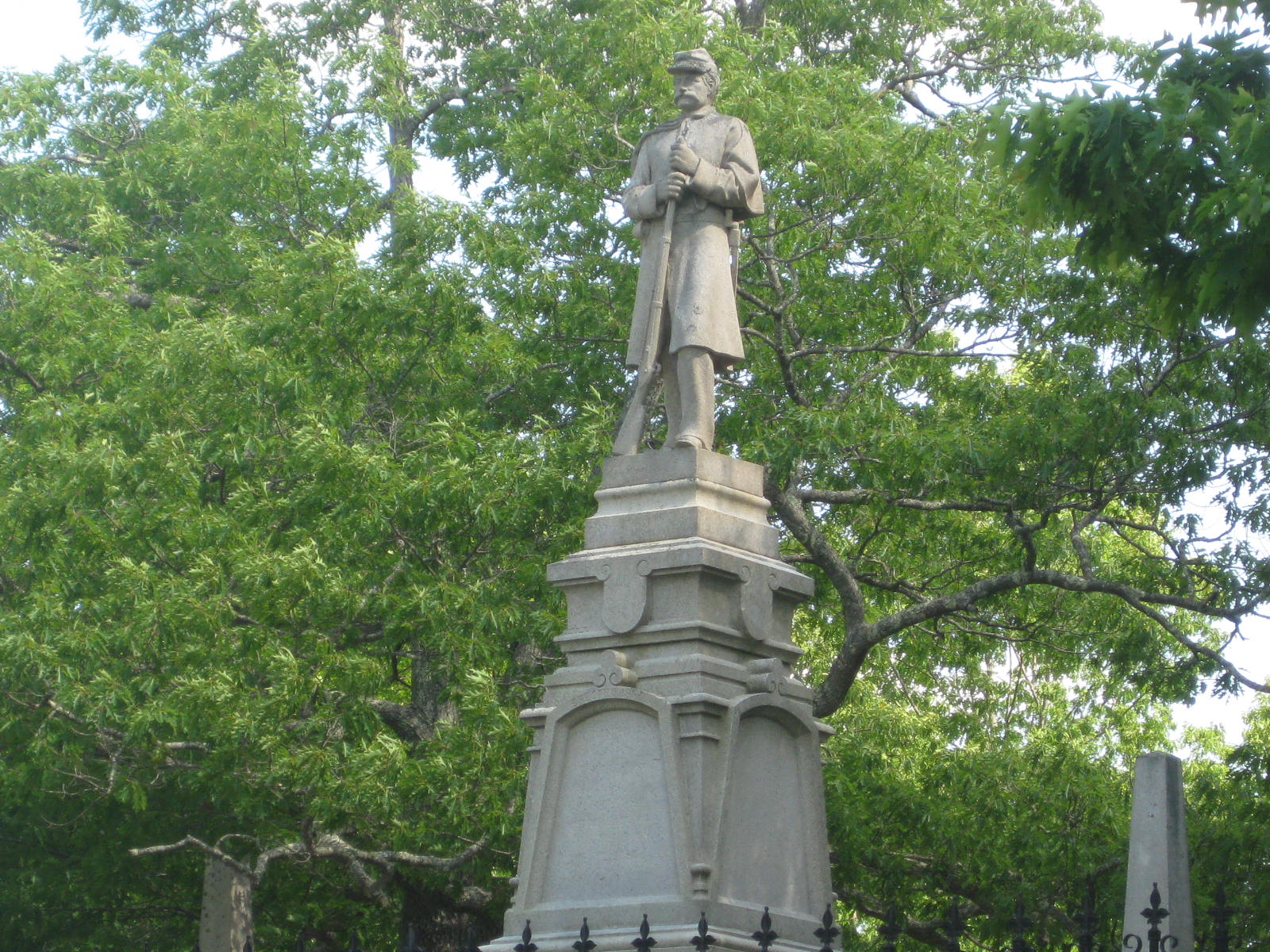
A couple of days ago, I happened upon my parents, suddenly in their 80's, suddenly tiny and bent over, leaving for the cemetery to place geraniums at family graves for Memorial Day.  I can remember back fifty years---my great grandparents going to the cemetery on this Spring ritual, then my grandparents, and now  watching my parents walk toward their car with trowels and plants (they cheerfully declined all offers of help), I realized with a start that soon I will be the one taking the geraniums to the cemetery.   Sobered and reflective upon this realization, I walked over to Seaside Cemetery (yes, the dead in our village enjoy ocean frontage), and paid a visit.   Flags were fluttering on the graves of all known soldiers buried there, veterans of all wars since the 1812, when a local militia unsuccessfully defended against British occupation.  The soldiers who served in the Revolution are buried in a yet older cemetery on my street.  


I read that Memorial Day is not celebrated in many places nowadays.  Not true here.  In my lifetime, the veterans of the Spanish American and First World Wars have gone, and now marching in our parade can be seen the veterans of World War II (ever fewer), Korea, Vietnam, Bush War I, Bush War II, and Afghanistan.  Behind the soldiers were cub scouts, and children on tricycles, just excited to be in a parade, not really yet understanding what the day is really about, and sadly,  unless we finally learn from history, all too soon there will be a war for them to remember too....

From a quiet side street, a crowd can be seen gathering for the parade on Main St.

It was a breathtaking day---summer came to Maine early and with great sincerity this year--gone the rains that have dominated the last three years.  The lilacs whose fragrance usually perfumes the parade were long past,  the temperature is in the 70's, and the sensation everywhere is of green leaves and brilliant blue sky and sparkling water. The excellent high school band played with verve, the veterans marched proud, the firetrucks gleamed.   And the stupid Dilettante, not paying attention, snapped dozens of pictures, not realizing that he hadn't changed the camera settings from video, resulting in  snapshots that didn't, hence there are no pictures of the color and pageantry here.  Sorry.
The Dilettante discovered too late that his camera was on video and not taking the snaps thought he was capturing.  This is the tail end of the parade, after the soldiers, the tank, the high school band, the firetrucks and the cub scouts....

Waiting for the parade to return from the cemetery

Old cars have been brought out for the summer, here with flags flying in honor of the day

The parade begins at the Legion Hall, in the original village academy building, where a small and dedicated group struggle to keep alive the memories of those who have served.   The cannon on the lawn was fired in salute.  Across the street, in the meadow in front of a village house, there is another memorial, a very evocative one, thousands of tiny white flags remembering the dead, military and civilian, killed in the current Bush War.  Here each Sunday, a peace vigil is held.   Just up the street lived my grandparents, and their neighbors, the Westcotts.  Each family had two sons in World War II, the boys grew up together.   My father and his brother returned safely---cruelly, the Westcott sons did not. 


After a stop on the bridge overlooking the harbor, where a 21 gun salute honors the dead of all branches of the armed forces, followed by Taps, the parade moves on to the cemetery, where flags flutter on the graves of Veterans of every war since the Revolution, and a wreath is laid at the Civil War Monument in one corner.


The parade then breaks up, and we all leave for our barbecues.

Veterans of three wars on the Town Hall Lawn, 1920's.